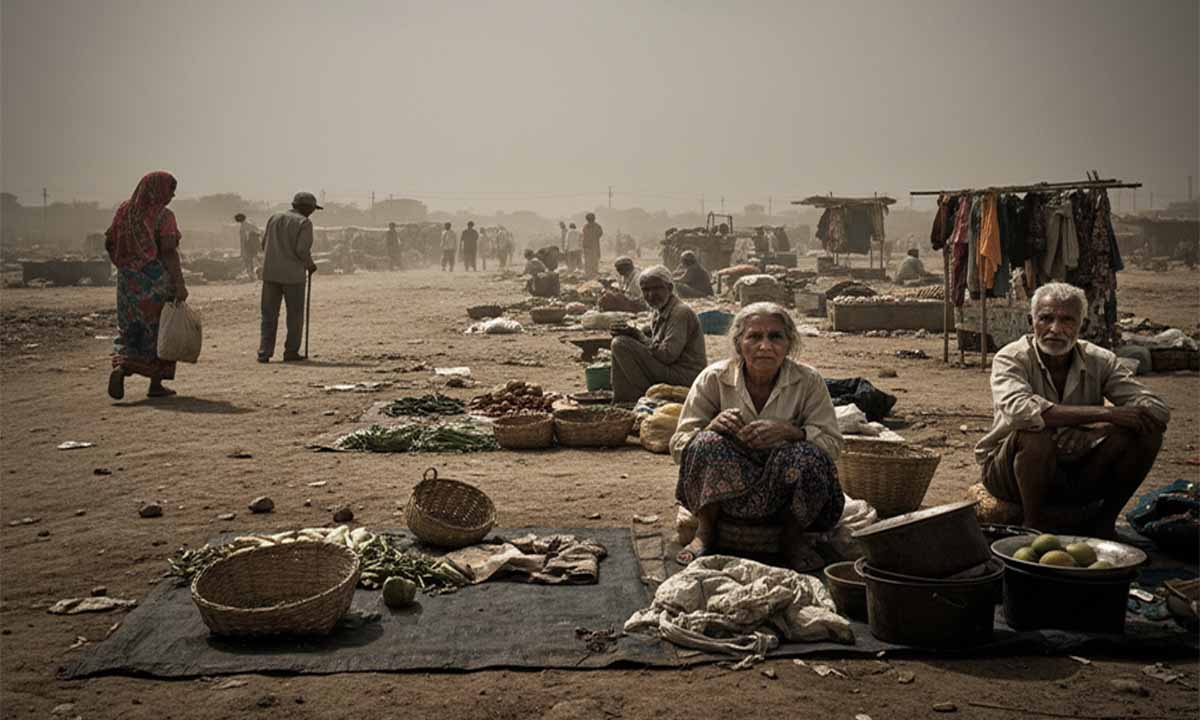
Poverty has a sound. It is the quiet of a market with too few buyers. It is the pause before a parent answers a child asking for breakfast. It is also the steady noise of work, because most people living in poverty work constantly. The fifty poorest nations help us see this clearly. Not as a headline, but as daily life shaped by low incomes, fragile services, and repeated shocks.
Summary
- This article explains poverty through income, services, and shocks across the fifty poorest nations.
- It provides a full list of fifty countries and a clean table of GDP per capita figures for easy comparison.
- It highlights why poverty persists and what tends to reduce it over time.
A single statistic can open the door. GDP per capita, in current United States dollars, is one way to compare income levels across countries. It is not the whole story, but it tells you how small the economic pie is before it is shared. That matters for wages, tax revenue, clinics, schools, and roads. It also helps explain why poverty can remain stubborn even when communities show remarkable strength.
To keep the focus on poverty, it helps to name what we mean. Extreme poverty is often used to describe people living on very low daily incomes, where basics like food, shelter, and medicine are not secure. Another useful lens is the Human Development Index, which combines health, education, and income. Income alone cannot capture lived hardship, but low income limits nearly every other choice.
The countries below are among the poorest by income per person. Many face conflict, climate stress, or isolation. Several face all three. In South Sudan, poverty deepens when violence disrupts farming and trade. In Burundi, land pressure and low productivity keep rural households trapped. In Malawi, repeated drought and flooding strain a largely agricultural economy.
In the Sahel, Niger carries the weight of a very young population with limited jobs. In Central African Republic, insecurity makes markets unpredictable and services fragile. In Mozambique, cyclones and conflict interrupt progress, even when investment arrives.
The Democratic Republic of Congo is a sharp example of low household income alongside high natural resource value. In Madagascar, drought and limited infrastructure raise food prices and reduce earnings. In Sierra Leone, recovery continues, yet poverty remains high as services rebuild slowly.
In Somalia, poverty is tied to long periods of instability and repeated drought. In Gambia, a narrow economic base limits jobs and wages. In Ethiopia, large rural populations face low cash incomes, especially in drought prone areas.
Outside Africa, Afghanistan shows how conflict and economic isolation can shrink incomes quickly. In Chad, distance and desert conditions raise the cost of delivering health and education. In Burkina Faso, insecurity has displaced families and disrupted farming.
In Mali, climate stress and insecurity weaken livelihoods. In Liberia, poverty persists alongside slow infrastructure growth. In Guinea, resource exports do not always translate into broad household income. In Eritrea, limited data and isolation complicate the picture, yet low incomes remain a defining feature.
These countries are part of a wider group that includes dozens more listed in this country overview. The common thread is not culture or character. It is constrained economic capacity, often reinforced by shocks that arrive faster than recovery can take hold.
What Poverty Means in Practice
Low income is not only about what a person earns. It shapes what a family can reach. A clinic may exist, yet the road is impassable in the rainy season. A school may be free, yet uniforms and books cost money. Food may be available in a town, yet transport doubles the price by the time it reaches a village.
Poverty is also risk. When income is low, a single illness can erase savings. A flood can wipe out a harvest. A price spike can push households into hunger. That is why the poorest countries often show a close link between climate shocks, conflict, and income decline.
The 50 Poorest Nations, Listed Clearly
Below is a practical list of fifty countries often found at the bottom of income per person rankings. You shared a set of twenty, and they are included here. The list is presented for readability and then followed by a statistics table.
- South Sudan
- Afghanistan
- Burundi
- Central African Republic
- Madagascar
- Malawi
- Mozambique
- Sudan
- Somalia
- Democratic Republic of Congo
- Niger
- Gambia
- Liberia
- Sierra Leone
- Ethiopia
- Mali
- Burkina Faso
- Chad
- Guinea
- Eritrea
- Tanzania
- Zambia
- Uganda
- Timor Leste
- Nepal
- Benin
- Tajikistan
- Pakistan
- Comoros
- Senegal
- Cameroon
- Laos
- Solomon Islands
- Republic of Congo
- Haiti
- Kiribati
- Kenya
- Papua New Guinea
- Mauritania
- Zimbabwe
- Bangladesh
- Kyrgyzstan
- Cambodia
- India
- Togo
- Guinea Bissau
- Rwanda
- Myanmar
- Lesotho
- Ghana
Country Statistics, Clean and Comparable
The table uses GDP per capita in current United States dollars as a simple, comparable poverty related indicator. These values are often reported as estimates for recent years. Lower values generally mean fewer resources available per person across the whole economy, which tends to correlate with higher poverty risk.
| Country | GDP per capita, USD | Poverty pressure, quick note |
|---|---|---|
| South Sudan | 313 | Conflict and floods cut trade and farming. |
| Afghanistan | 417 | Conflict legacy, job collapse, food insecurity. |
| Burundi | 486 | Land pressure, low productivity, high malnutrition. |
| Central African Republic | 599 | Insecurity limits markets and services. |
| Madagascar | 616 | Drought and isolation drive food price spikes. |
| Malawi | 622 | Rain fed farming, climate shocks, low wages. |
| Mozambique | 690 | Cyclones, displacement, uneven investment reach. |
| Sudan | 712 | Conflict and inflation erode household income. |
| Somalia | 763 | Drought cycles and instability reduce earnings. |
| Democratic Republic of Congo | 772 | Resource wealth, low household income, weak roads. |
| Niger | 789 | Rapid population growth, heat, limited jobs. |
| Gambia | 890 | Narrow exports, rural poverty, seasonal income. |
| Liberia | 904 | Post crisis recovery, infrastructure gaps. |
| Sierra Leone | 980 | Human capital loss, service rebuilding. |
| Ethiopia | 994 | Large rural sector, drought risk, low cash income. |
| Mali | 1,014 | Climate stress and insecurity disrupt farming. |
| Burkina Faso | 1,115 | Displacement, insecurity, shrinking livelihoods. |
| Chad | 1,139 | Distance, desertification, high service costs. |
| Guinea | 1,741 | Resource exports, limited rural income transfer. |
| Eritrea | No recent figure | Limited data, isolation, low household income. |
| Tanzania | 1,302 | Rural poverty, low productivity, service gaps. |
| Zambia | 1,353 | Debt stress and uneven growth, rural hardship. |
| Uganda | 1,353 | Fast growth, low wages, limited formal jobs. |
| Timor Leste | 1,508 | Oil dependence, limited jobs, high prices. |
| Nepal | 1,535 | Remittances help, rural poverty persists. |
| Benin | 1,635 | Low industrial base, climate exposure. |
| Tajikistan | 1,644 | Migration reliance, limited job creation. |
| Pakistan | 1,707 | Inflation shocks, low female labor participation. |
| Comoros | 1,773 | Island constraints, import dependence. |
| Senegal | 1,921 | Urban growth, rural poverty remains. |
| Cameroon | 2,027 | Regional inequality, service gaps. |
| Laos | 2,174 | Debt stress, rural poverty, limited services. |
| Solomon Islands | 2,386 | Geography raises costs, limited scale. |
| Republic of Congo | 2,420 | Oil dependence, inequality, weak rural services. |
| Haiti | 2,461 | Instability and disasters reduce income security. |
| Kiribati | 2,481 | Small economy, climate risk, high import costs. |
| Kenya | 2,549 | Jobs lag behind youth growth, high food prices. |
| Papua New Guinea | 2,555 | Rugged terrain, weak service reach. |
| Mauritania | 2,582 | Desert constraints, limited diversification. |
| Zimbabwe | 2,656 | Inflation history and low formal employment. |
| Bangladesh | 2,734 | Low wages, climate exposure, dense urban poverty. |
| Kyrgyzstan | 2,790 | Mountain geography, migration dependence. |
| Cambodia | 2,812 | Low wage industry, rural land insecurity. |
| India | 2,818 | Large poor population, uneven service access. |
| Togo | 1,120 | Low earnings, rural vulnerability. |
| Guinea Bissau | 1,225 | Cash crop dependence, weak services. |
| Rwanda | 1,043 | Strong reforms, yet low income base. |
| Myanmar | 1,097 | Conflict shock, displacement, job loss. |
| Lesotho | 1,001 | High unemployment, health burdens. |
| Ghana | 3,193 | Debt stress raises living costs for the poor. |
Note: Some countries have limited or missing recent estimates in common datasets. Where a recent GDP per capita figure is not available, the table flags it plainly.
Why These Numbers Point to Poverty
A low GDP per capita means fewer resources to support basic public goods. It often translates into underfunded schools, clinics, and safety nets. It also leaves households exposed. When food prices rise, families have little buffer. When a wage earner gets sick, income drops fast. When a storm hits, rebuilding can take years.
It also means governments have fewer options. Tax bases are smaller. Borrowing costs can be higher. Infrastructure projects stall. This is one reason poverty can persist even when people work hard. It is not a lack of effort. It is a lack of economic capacity, paired with repeated shocks.
Five Poverty Traps That Repeat Across the Poorest Fifty
Patterns show up again and again. They are not identical, but they rhyme.
1. Weak roads and high transport costs raise food prices.
2. Low electricity access limits business growth and study time.
3. High fertility and youth bulges outpace job creation.
4. Conflict and displacement break markets and schooling.
5. Climate shocks damage harvests and push families into debt.
Quick Listicle, What Helps Reduce Poverty When It Sticks
There is no single fix. Yet certain moves show up in places where poverty has fallen over time. These are not magic. They are practical.
- Reliable primary health care that reaches rural areas.
- Safe roads that connect farmers to markets.
- Cash transfers targeted to the poorest households.
- Girls staying in school through secondary levels.
- Clean water systems that reduce disease and lost work time.
- Job growth in cities that is matched by housing and services.
Voices That Keep the Focus Human
“Prices rise fast. When income is low, one week can change everything.” |
“When the road is fixed, we sell more. Then we can pay school costs.” |
These statements sound simple. They are also deeply economic. Prices, roads, access, and income stability are the building blocks of poverty reduction.
Seeing Poverty as a System, Not a Label
A country can be poor while still holding immense value. Value in people, culture, and natural wealth. The issue is whether households can turn effort into stable income. In the poorest nations, the ladder often has missing rungs. Markets are thin. Credit is expensive. Insurance is rare. A shock hits, and gains vanish.
This is also where the meaning of gross domestic product matters. GDP is the size of the economy, not the fairness of outcomes. A country can grow while poverty falls slowly if growth does not reach rural areas, if food prices spike, or if conflict breaks supply chains.
Practical Takeaways for Readers Who Want Clarity
The fifty poorest nations are not a single story. Still, the poverty side of the picture becomes clearer with a few grounded points.
1. Low income per person limits public services and private opportunity.
2. Poverty intensifies when conflict and climate shocks overlap.
3. Roads, power, and basic health care are not extras, they are income tools.
4. Education helps most when it is paired with jobs and safe mobility.
5. Stability matters because poverty reduction usually takes years, not months.
Reading the List With Respect
Listing the poorest countries can feel harsh. It helps to remember what the list really reflects. It reflects constrained resources, often shaped by events beyond any one person’s control. It also reflects resilience. People adapt, share, rebuild, and keep going. Poverty is not a personality trait. It is a condition created by systems, shocks, and scarcity.
Understanding poverty through the poorest fifty nations is a way to focus attention where the need is greatest. It also pushes the global conversation toward practical support, long term investment, and humility. That is where lasting poverty reduction tends to begin.