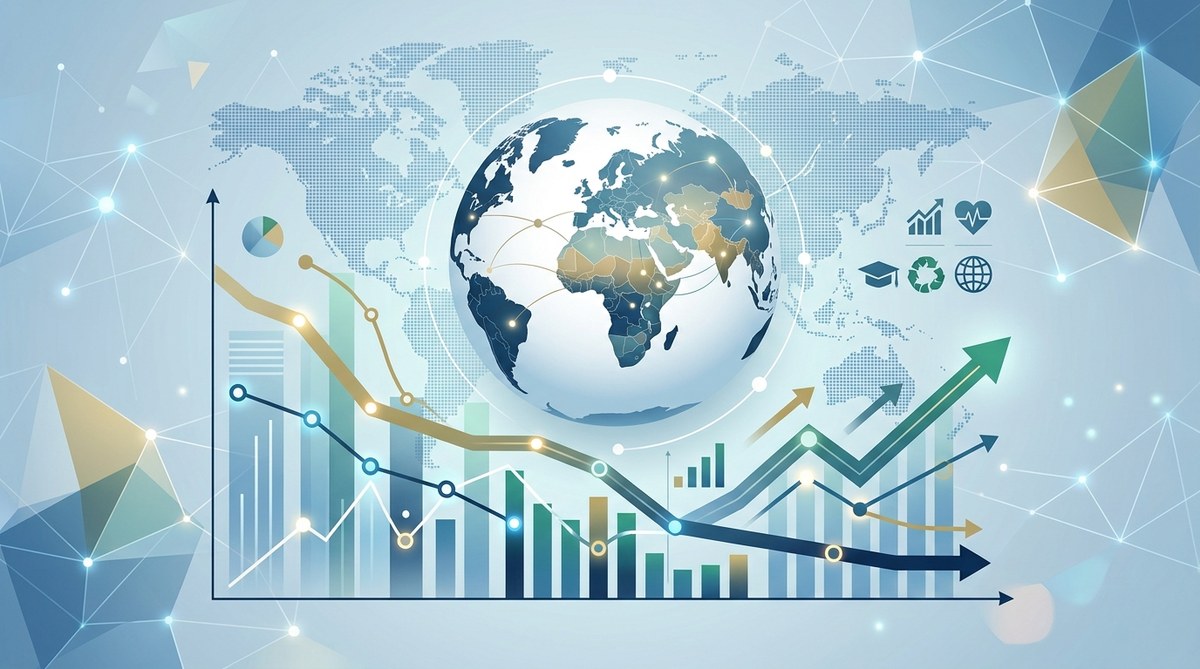
Global poverty remains a defining lens through which we view development, policy, and human rights. The latest data arrive against a backdrop of rapid shocks and steady progress. As climate events, pandemics, and economic shifts reshape risk, understanding what the numbers say — and what they miss — helps communities, donors, and decision makers align efforts with reality on the ground. At GlobeScan Foundation, we blend data literacy with community voices to translate complex statistics into practical action. This article synthesizes the newest data from major sources, explains why measures can differ, and highlights what the trends mean for the future of poverty and aid.
What the latest data is telling us
Global poverty trends are not a single marching line. They are a tapestry of progress and setbacks tied to geography, policy choices, and social protection. Here is a concise synthesis of what the current data indicate, followed by a deeper dive into regional patterns and the evolving measurement picture.
- The world has seen substantial long term declines in extreme poverty, driven by sustained growth, poverty targeted programs, and improved coverage of basic services in many parts of the world.
- Despite overall gains, hundreds of millions of people remain in extreme poverty or near poverty, and recent shocks have pushed vulnerable households back toward the edge in multiple regions.
- The pace of improvement is uneven. Some regions and countries advance rapidly while others confront stagnation or regression due to conflict, climate stress, or weak social protection systems.
- Measurement matters. Different organizations use varying poverty lines, survey methods, and cost of living adjustments, which can produce different if not contradictory pictures of the same global story.
A global snapshot minus the headlines
- Global estimates emphasize a decline in extreme poverty since the long century of growth, but new data and revised methodologies can shift the numbers and regional classifications.
- The distribution of improvements often tracks with structural changes in labor markets, rural to urban migration, and the reach of social protection programs.
- The tail of the poverty curve remains stubborn in certain geographies where risk is structural rather than episodic.
Regional patterns worth watching
- Sub Saharan Africa continues to have high poverty exposure, with progress tied to agricultural resilience, job creation in urban centers, and expanding social safety nets.
- South Asia has experienced notable gains in many countries, though pockets of poverty persist in rural districts and among marginalized communities.
- Latin America and the Caribbean show both improvement in several countries and rising vulnerability in others due to inequality, inflation dynamics, and uneven access to services.
- East Asia and the Pacific display strong gains in many economies, yet small island developing states face unique vulnerabilities that can affect poverty outcomes.
How sources differ and why that matters
Three major families of data often inform the public conversation about poverty: the World Bank Poverty and Inequality Platform, Our World in Data, and regional or global agencies like the UN. Each source brings strengths and caveats, and the way they measure poverty can shape policy debates.
World Bank and the poverty line question
- The World Bank typically uses a defined international poverty line and household survey data to estimate extreme poverty levels. Changes in the line or in how data are collected can shift estimates, but the underlying drift is guided by lived experiences of deprivation.
- In recent years, there has been a push to harmonize methodologies, improve handling of missing data, and incorporate new survey years. This process can produce revisions that look like a setback, but they often reflect more accurate capture of who is truly living in extreme poverty.
- For policymakers, the key takeaway is to watch both the trend over time and the narrative behind methodology changes. A drop in reported poverty alongside a methodological update does not automatically mean hardship has evaporated; it means our picture has become more precise.
Our World in Data and the broader data ecosystem
- Our World in Data aggregates multiple sources and provides accessible visualizations that highlight both global trajectories and local contexts. It helps readers compare across countries and time with transparency about assumptions and data gaps.
- The strength here lies in comparability and open access. The potential pitfall is overinterpretation when readers assume one universal measure applies everywhere without considering local cost of living and household survey design.
- For practitioners, this means using multiple sources in dialogue rather than relying on a single figure. It also underscores the value of regional context and qualitatively informed interpretation.
UN SDG tracking and regional assessments
- The UN and other international bodies synthesize poverty indicators within the broader framework of sustainable development goals. They often emphasize human rights, social protection, and resilience alongside income based measures.
- This lens helps connect poverty scores to governance quality, policy space, and commitments such as universal health coverage, education access, and social protection coverage.
- For civil society and donors, SDG oriented reporting reinforces the case for integrated approaches that combine cash transfers with health services, nutrition, education, and climate adaptation.
Why these differences matter for readers
- Policy design: Understanding the nuances helps decide where to invest, how to target, and when to adjust programs as data evolves.
- Public communication: Clear, consistent messaging about what is changing and why prevents misinterpretation and builds trust with communities.
- Community action: Recognizing data gaps can guide local advocates to collect better evidence, tell clearer stories, and hold authorities to account.
The measurement story that matters for policy and practice
Data are a tool for action, not a verdict. The latest trend lines are powerful when used to identify vulnerable groups, monitor program impact, and adapt strategies. Several threads deserve attention as we interpret new results.
- Poverty is not only about income. Multidimensional poverty includes health, education, living standards, and security. A country may see income gains while other dimensions improve more slowly.
- Shocks matter. Droughts, floods, conflict, and price spikes can erase progress quickly for households at the bottom of the distribution.
- Social protection matters. Expanding predictable transfers, health coverage, and access to education can create a safety net that reduces the risk of falling back into poverty after a crisis.
- Data quality is a policy issue. Investments in household surveys, timely data collection, and locally tailored poverty measures improve the relevance of policy responses.
A practical guide to interpreting the numbers
- Look for longer horizons. Short term fluctuations may reflect one off events; the strongest signals come from multi year trends.
- Compare sources, but beware of apples to oranges. Different poverty lines or survey methods can produce different figures for the same country.
- Focus on vulnerable groups. Children, women, rural households, and informal workers often experience poverty differently than national averages.
- Assess policy coherence. Are social protection, health, and education reforms aligned to reduce vulnerability across the whole population?
- Consider geography. Urban poor faces different challenges than rural poor, including access to services and cost of living.
Spotlight: The 50 poorest nations and what data shows
The GlobeScan Foundation approach invites us to look beyond headlines and dive into country level realities. The 50 poorest nations, as commonly tracked in global discourse, often share common hurdles such as limited fiscal space, climate vulnerability, weak governance, and gaps in service delivery. Yet within this group there are bright spots and lessons that can be scaled or adapted.
- Common drivers across many of these nations include exposure to climate shocks, reliance on informal labor, and limited access to quality health care and education. When donors and governments pair cash assistance with health, nutrition, and schooling, effects tend to be more durable.
- A recurring theme is the importance of data transparency. When communities can see how funds reach them and what difference it makes, trust and uptake improve.
- Local ownership matters. Programs that involve community leaders, women’s groups, and youth networks tend to be more sustainable and better tailored to real needs.
What this means for supporters and practitioners:
– Targeted interventions should prioritize social protection that reaches extended family networks and vulnerable groups.
– Pair economic support with health and education investments to maximize long term gains.
– Use data storytelling to illuminate local impact and create accountability loops with communities.
How GlobeScan Foundation connects data with people and voices
GlobeScan Foundation blends global evidence with community insights to ensure that data does not stay in dashboards but informs real world action. Our approach includes:
- Opinion trends: Understanding how people perceive poverty, human rights, and hope helps tailor communication and mobilize support in constructive ways.
- Community storytelling: We translate survey data into human stories that highlight lived experiences behind the numbers.
- Digital storytelling: Short videos, interactive maps, and social media narratives help reach diverse audiences and bring attention to overlooked issues.
- Disaster monitoring: Early warning and rapid response are essential to protect the poor when hazards strike.
- Bridging information gaps: We aim to connect researchers, policymakers, journalists, and communities so that information travels in two directions—from data to action and from lived experience back to research.
How to read poverty data with a GlobeScan mindset
If you are a practitioner, donor, journalist, or student, here are some practical steps to engage with poverty data meaningfully:
- Start with contexts: Review regional profiles to understand what is driving changes in a given country.
- Ask about measurement: Inquire how poverty is defined, what data sources were used, and when the latest surveys were conducted.
- Look for impact indicators: Beyond income, examine access to healthcare, education, safe housing, and social protection.
- Seek community voices: Pair quantitative data with qualitative stories to gain a fuller picture of who is affected and how programs are working on the ground.
- Use the data to design better programs: Map interventions to specific vulnerabilities and ensure there is a plan for monitoring and learning.
Tools and resources you can explore
- Global datasets from World Bank PIP and Our World in Data to compare poverty trends across countries and time periods.
- Country profiles highlighting poverty drivers, policy responses, and social protection coverage.
- Interactive dashboards that visualize multidimensional poverty indicators and regional disparities.
- Opinion and perception surveys that help bridge data with what communities say about their own situation.
- Case studies that illustrate successful approaches to reducing poverty and addressing vulnerability.
Practical implications for policy makers and donors
Based on the latest data and the lived realities we hear from communities, a few policy priorities emerge that are consistent across many contexts:
- Strengthen social protection systems so that they are scalable, predictable, and responsive to shocks.
- Invest in inclusive health and education services that reach the poorest households and are adaptable to local languages and cultures.
- Promote inclusive growth by supporting small and medium enterprises, agricultural resilience, and skilled labor markets in rural and urban settings alike.
- Integrate climate risk management with poverty reduction strategies, so vulnerable households can adapt rather than fall behind.
- Improve data quality and timeliness, ensuring that poor and marginalized groups are represented in surveys and that local feedback informs program design.
- Elevate civil society voices in monitoring and accountability processes to ensure that aid reaches intended beneficiaries.
The path forward: balanced optimism and pragmatic action
The latest data on global poverty shows both progress and persistence. This dual truth pushes us to stay optimistic about the potential for ending extreme poverty while remaining pragmatic about the work needed to reach the most vulnerable. By combining rigorous data analysis with community voices, we can design responses that are not only effective but also respectful of local contexts and human dignity.
At GlobeScan Foundation, we will continue to blend data with dialogue, and numbers with narratives. Our aim is to empower communities to claim their rights, encourage policymakers to act with urgency and empathy, and inspire donors to align resources with what actually works on the ground. The road to reducing poverty is not a straight line, but a series of informed steps that build resilience, expand opportunity, and restore hope.
Final takeaways
- Global poverty is declining overall, but the pace of decline is uneven and vulnerable to shocks.
- Multiple data sources help paint a fuller picture but require careful interpretation and cross reference.
- Poverty measurement is evolving; understand the definitions, methods, and regional specifics behind the numbers.
- Policy action should couple cash support with health, education, and climate resilience to create durable improvements.
- Community voices matter — data storytelling and public engagement are essential to translating numbers into change.
If you are curious to learn more about how these trends look in specific countries or regions, or want to explore interactive tools that visualize poverty alongside public opinion, visit GlobeScan Foundation and explore our Poverty & Aid resources. We are committed to making data human, and data actionable, so that the fight against poverty is informed, inclusive, and effective.